
Breakthroughs in Breast Cancer Care: Reconstruction and Side Effect Prevention

Breast cancer care has evolved far beyond the simple goal of survival. Today, at Sidra Family Hospital, we focus on the “whole woman,” ensuring that recovery includes the restoration of physical form and the prevention of long-term side effects. Modern medicine now offers incredible breakthroughs that prioritize both aesthetic results and daily comfort.
New Horizons in Breast Cancer Reconstruction
For many women, the journey through breast cancer involves surgery. In the past, the focus was purely on removing the tumor. Today, breast cancer reconstruction is considered a vital part of the healing process.
Surgeons now use advanced tissue-based reconstruction, which utilizes the patient’s own tissue to create a natural look and feel. These techniques are often performed during the same surgery as the mastectomy, reducing the number of procedures and accelerating the emotional recovery of the patient.
The Translation: Medical Care Simplified
When we talk about breakthroughs, we are referring to three specific areas: reconstruction, lymphedema prevention, and side-effect management. In simple terms, these advancements mean you don’t have to live with the visible or physical “scars” of cancer forever.
- Reconstruction: Restoring the breast shape using implants or your own body tissue.
- Lymphedema Prevention: Specialized techniques during surgery to ensure the arm doesn’t swell due to lymph node removal.
- Chemotherapy Support: New protocols to reduce nausea, hair loss, and nerve pain.
The Socio-Economic Impact: Protecting the Family Pillar
In our local Pakistani context, a woman is often the primary caregiver and the emotional backbone of the family. When a mother or sister faces a health crisis, the entire household is affected. Unfortunately, social factors like sharm (modesty) or fear of social stigma often lead to delays in seeking medical help.
Delaying diagnosis not only makes treatment more difficult but also increases the financial burden on the family. By prioritizing breast cancer reconstruction and early screening, we ensure that women can return to their lives, their families, and their work with confidence. Health is not just a personal matter; it is a family investment.
Restoring Mobility: The “Broken Wing Sign”
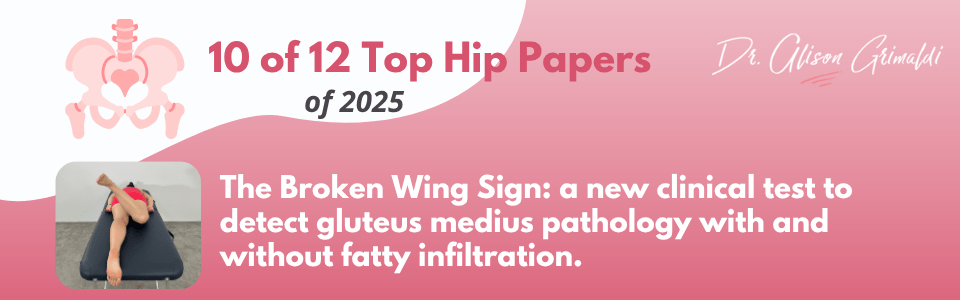
Recovery also means maintaining mobility. Some women experience hip or pelvic discomfort after cancer treatments due to hormonal changes. At Sidra Family Hospital, we use advanced clinical tests like the “Broken Wing Sign” to check for gluteus medius tendon issues.
If you lie on your side and cannot maintain hip control, it may indicate muscle atrophy or tendon pathology. Our holistic approach ensures that while we treat the breast, we also protect your ability to walk, run, and play with your children.
The Forward Path: Your Prevention Guide
The best way to manage breast cancer is to catch it before it grows. This starts with a monthly commitment to yourself. Early detection allows for more options in breast cancer reconstruction and significantly less aggressive chemotherapy.
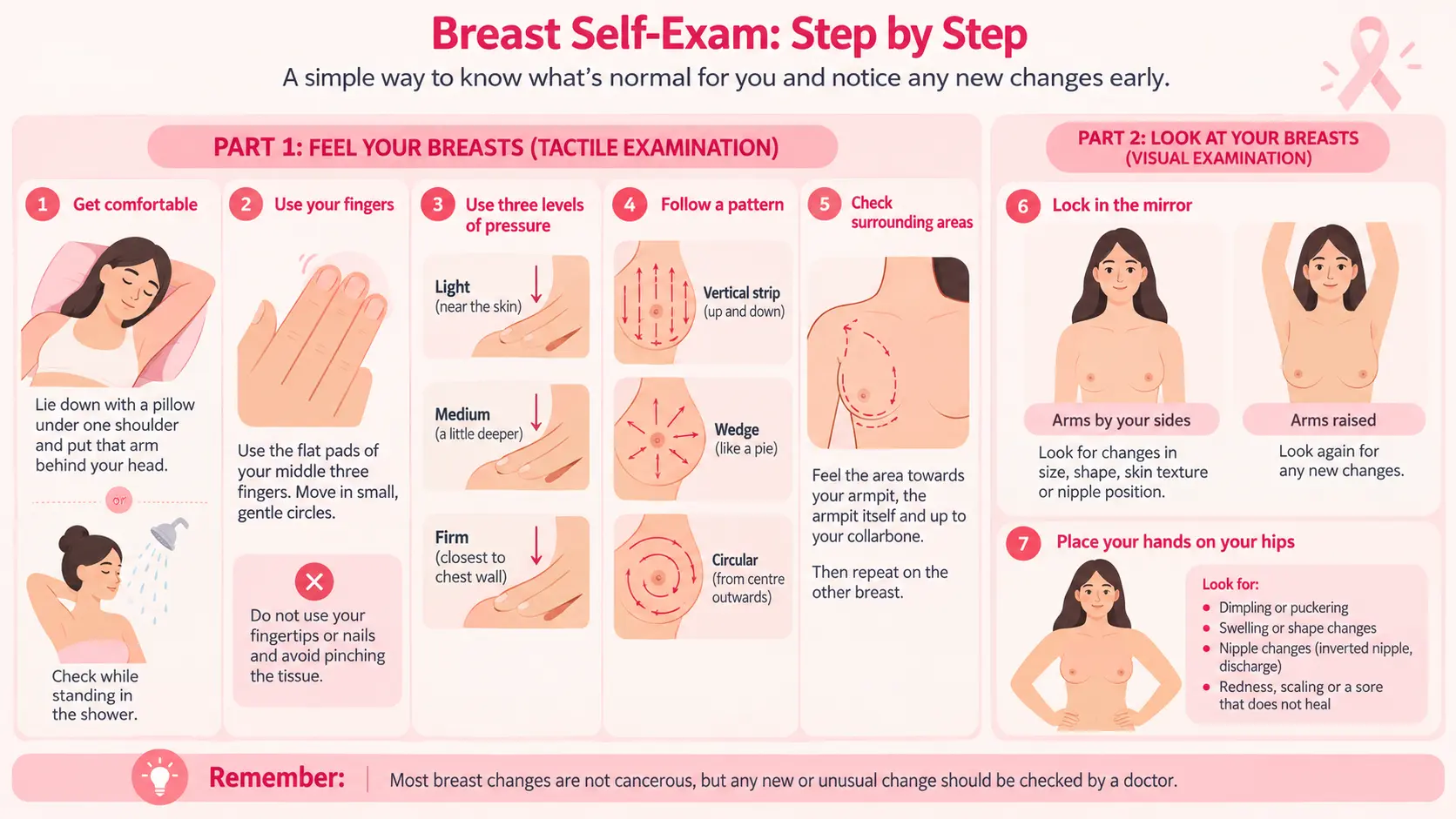
How to Perform a Breast Self-Exam (BSE)
Perform this exam once a month, ideally one week after your period ends. Use the following three-step approach:
- In the Mirror: Look for any changes in skin texture, dimpling, or nipple discharge.
- Lying Down: Use the pads of your middle three fingers. Move in small circular motions to cover the entire breast and armpit area.
- Pressure Levels: Use light pressure for the skin, medium pressure for the middle tissue, and firm pressure for the tissue closest to the ribs.
When to Visit Sidra Family Hospital
If you feel a lump, do not panic. Most lumps are not cancerous, but they all require professional evaluation. Our Gynecology Department offers a compassionate environment where you can discuss your concerns without fear.
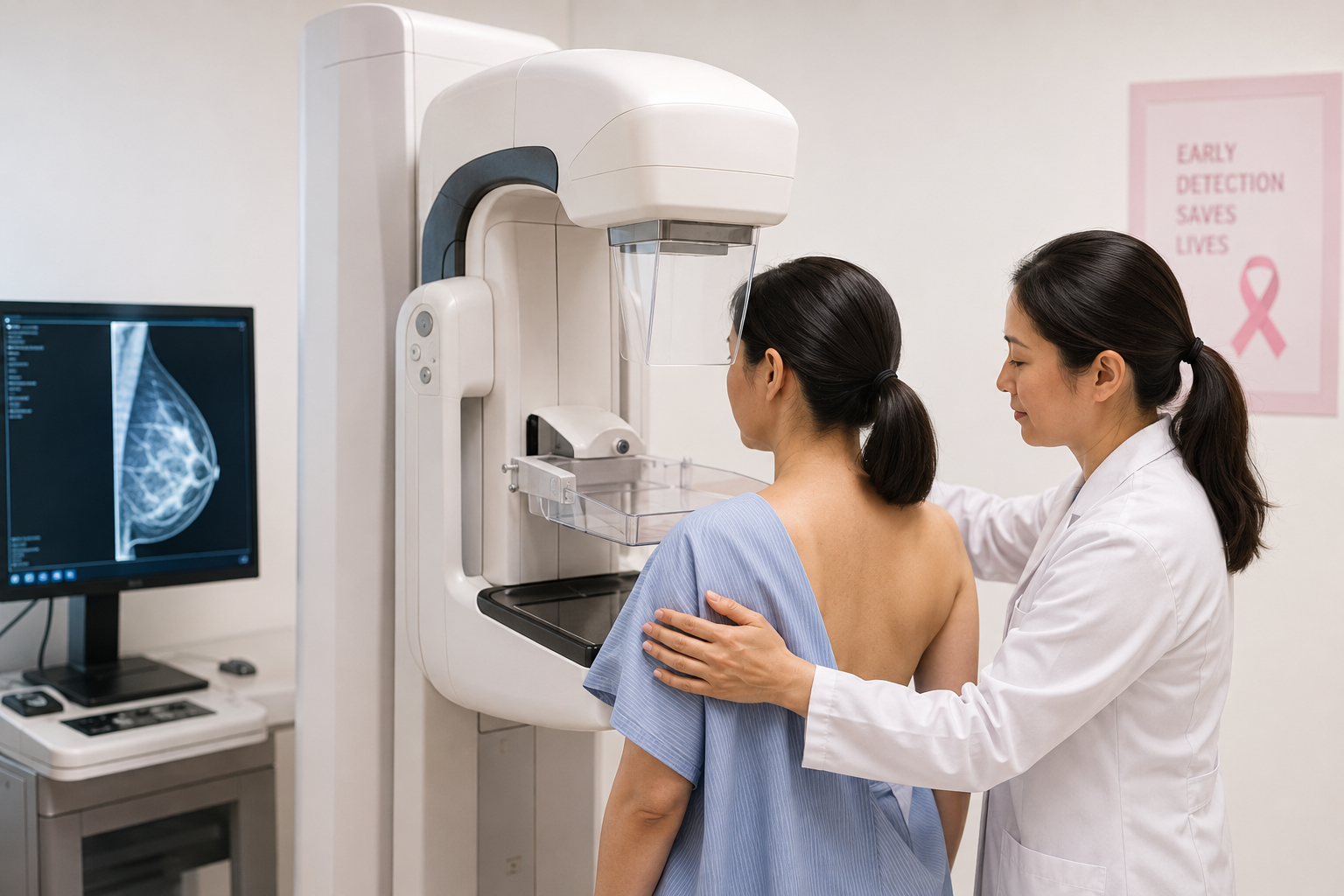
Women over 40 should schedule an annual mammogram. If you have a family history of cancer, we may recommend earlier screenings or MRI scans. Your future depends on the actions you take today.
Frequently Asked Questions
1. At what age should I start screening?
Annual mammograms are generally recommended starting at age 40. However, monthly self-exams should begin in your 20s.
2. Is radiation from mammography safe?
Yes. The amount of radiation is extremely low and the benefits of early detection far outweigh the minimal risks.
3. Can reconstruction be done years after a mastectomy?
Absolutely. Breast cancer reconstruction can be performed as a “delayed” procedure, even years after your initial treatment.
4. What does “dense breasts” mean on my report?
Dense breasts have more glandular tissue than fatty tissue. This can make mammograms harder to read, so we may suggest a supplemental ultrasound.