Most Common Treatment for Posterior Shoulder Dislocation: A Recovery Guide
Most Common Treatment for Posterior Shoulder Dislocation: A Comprehensive Recovery Guide
At Sidra Family Hospital, we understand that a shoulder dislocation is more than just a medical diagnosis; it is a distressing experience that can halt your daily life and cause significant concern for your family. Whether the injury occurs during a high-impact sports match or as a result of a sudden fall, the pain and loss of mobility are immediate and overwhelming.
While anterior dislocations (where the bone pops forward) are more frequent, a posterior shoulder dislocation—where the upper arm bone is pushed backward—is a complex condition that requires specialized orthopedic expertise. Our “Family-First” approach ensures that you receive compassionate, professional care from the moment you enter our emergency department through your final physiotherapy session.
The Translation: Understanding Posterior Shoulder Dislocation
To understand the most common treatment for posterior shoulder dislocation, we must first translate the medical terminology into clear information. The shoulder is a “ball and socket” joint. In a posterior dislocation, the head of the humerus (the ball) is forced out of the back of the glenoid (the socket).
Unlike anterior dislocations, which often happen from reaching out during a fall, posterior dislocations are frequently associated with specific traumas such as seizures, electrical shocks, or direct high-energy impact to the front of the shoulder. This type of injury can be subtle on standard X-rays, making it vital to seek care at a facility like Sidra Family Hospital, where our diagnostic imaging and orthopedic specialists can accurately identify the displacement.
When this happens, the surrounding ligaments, tendons, and muscles are often stretched or torn. This leads to intense pain and an inability to rotate the arm outward. Understanding these mechanics is the first step in appreciating why a structured, professional treatment plan is non-negotiable for long-term joint health.
The Socio-Economic Impact: Why Timely Care Matters in Pakistan
In our local context, a shoulder injury rarely affects just the patient. In many Pakistani households, a single breadwinner supports multiple generations. A posterior shoulder dislocation can mean weeks or months away from work, leading to financial strain and emotional stress for the entire family unit.
We often see patients who attempt to “set” the bone through traditional, non-medical means. This can lead to permanent nerve damage or chronic instability. By choosing professional orthopedic care at Sidra Family Hospital, families can avoid the long-term socio-economic costs associated with chronic pain or the need for more invasive, expensive surgeries later in life.

The Most Common Treatment for Posterior Shoulder Dislocation
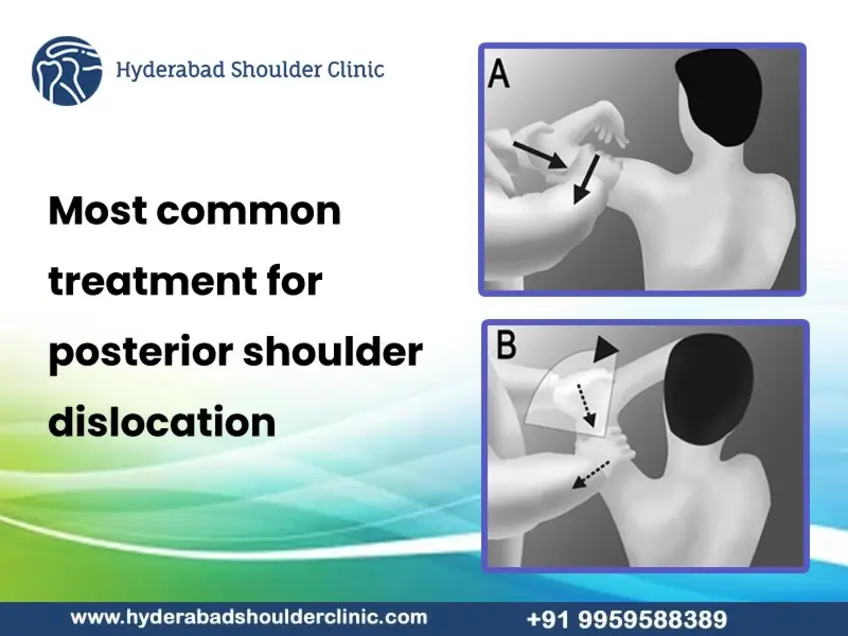
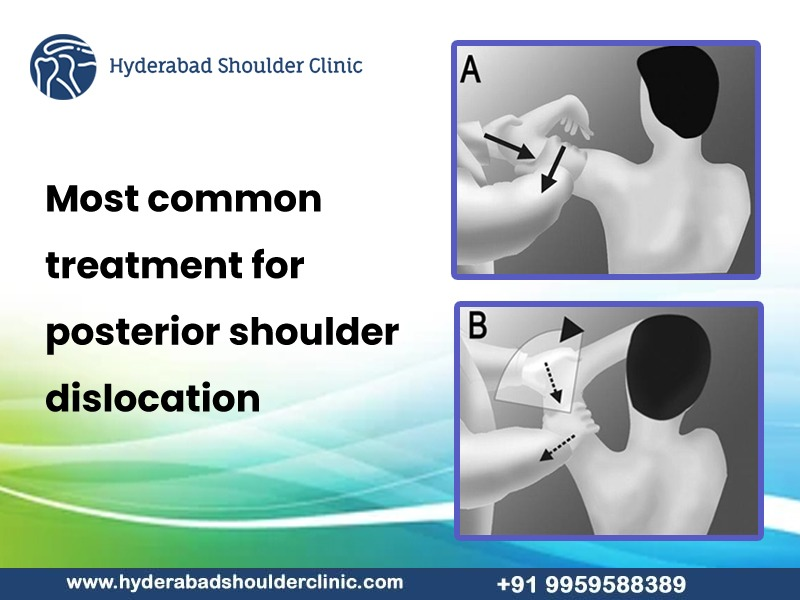
The most common treatment for posterior shoulder dislocation follows a structured, evidence-based protocol designed to restore stability and function. At Sidra Family Hospital, our process is divided into four critical phases:
1. Emergency Closed Reduction
The immediate priority is returning the humeral head to its socket. This is typically performed under sedation or general anesthesia to ensure the patient is comfortable and the muscles are relaxed. Our orthopedic surgeons use gentle, controlled maneuvers to guide the bone back into place without causing further damage to the joint surface.
2. Immobilization and Protection
Once the shoulder is reduced, it must be protected. Unlike anterior dislocations, posterior dislocations often require immobilization in a specific “gunslinger” or neutral rotation brace for 3 to 6 weeks. This allows the posterior capsule and ligaments to heal in the correct position, reducing the risk of a repeat dislocation.
3. The Four-Phase Rehabilitation Plan
Recovery is a marathon, not a sprint. Our physiotherapy team guides you through:
- Phase I: Gentle passive range-of-motion exercises to prevent “frozen shoulder.”
- Phase II: Active-assisted movements to regain control.
- Phase III: Strengthening the rotator cuff and scapular stabilizers.
- Phase IV: Return to sports or heavy labor with specialized functional training.
4. Monitoring for Complications
We monitor every patient for signs of “reverse Hill-Sachs lesions” or labral tears. By catching these issues early, we can prevent the onset of early-stage arthritis and ensure the joint remains stable for years to come.
The Forward Path: Steps to Your Recovery
If you suspect a shoulder injury, the forward path is clear: do not wait. Immediate intervention is the best predictor of a full recovery. If you experience a sudden loss of shoulder movement, a “squared-off” appearance of the shoulder, or intense pain following a fall or seizure, visit Sidra Family Hospital immediately.
To prevent future injuries, we recommend focusing on posterior chain strength and maintaining bone health through proper nutrition. Our clinical team is always available to discuss preventive exercises tailored to your lifestyle. At SFH, we are not just treating a shoulder; we are helping a family member return to their life. Trust our expertise to guide you safely from the acute pain of injury back to the comfort of your daily routine.