
Time Management for Autism Parents: Strategies for a Balanced Life

Caring for a child with developmental needs requires immense strength, patience, and a highly structured environment. For many families, the day feels like a race against time between therapy sessions, school, and daily chores.
Mastering time management for autism parents is not just about efficiency; it is a vital component of family wellness. At Sidra Family Hospital, we prioritize your family’s journey through expert Pediatrics and Lifestyle Medicine support.
The Translation: Understanding the Caregiver’s Burden
In medical terms, the constant state of “alertness” required by parents of children with Autism Spectrum Disorder (ASD) can lead to chronic activation of the amygdala. This is the brain’s “fight or flight” center.
When you are perpetually managing sensory triggers or behavioral transitions, your nervous system rarely rests. Effective time management for autism parents involves more than a calendar; it requires neurological recovery through mindfulness and structured support.
Applied Behavior Analysis (ABA) services are a cornerstone of this process. By focusing on building a child’s independence in daily tasks—like dressing or feeding—ABA therapy eventually reduces the time parents must spend on direct care, creating much-needed mental space.
The Socio-Economic Impact: The Pakistani Context
In Pakistan, the challenges of time management for autism parents are compounded by unique socio-economic factors. Many families live in multigenerational households where expectations for “perfect” behavior can add immense pressure.
The lack of specialized local resources often means parents must travel long distances for quality care. This “travel tax” eats away at time that could be spent on self-care or bonding. Furthermore, the social stigma surrounding developmental delays often prevents parents from seeking the community help they deserve.
At Sidra Family Hospital, we bridge this gap. By providing integrated care under one roof, we help families streamline their medical schedules, reducing the logistical burden that contributes to caregiver burnout.

The Science of Self-Care: Rewiring the Caregiver Brain
Scientific evidence proves that daily meditation can physically reshape the brain. For busy parents, meditation is a clinical tool that increases gray matter in the prefrontal cortex, which is responsible for emotional regulation and decision-making.
By shrinking the amygdala, daily mindfulness practice actively reduces the stress response. We suggest starting with just five minutes of breath awareness or a “body scan” during a quiet moment, perhaps after the children are asleep or during morning prayers.
Consistency is the key to neuroplasticity. Boosting feel-good chemicals like serotonin and dopamine helps you maintain the patience and clarity needed to navigate the complexities of autism caregiving.
The Forward Path: Practical Steps to Reclaim Your Day
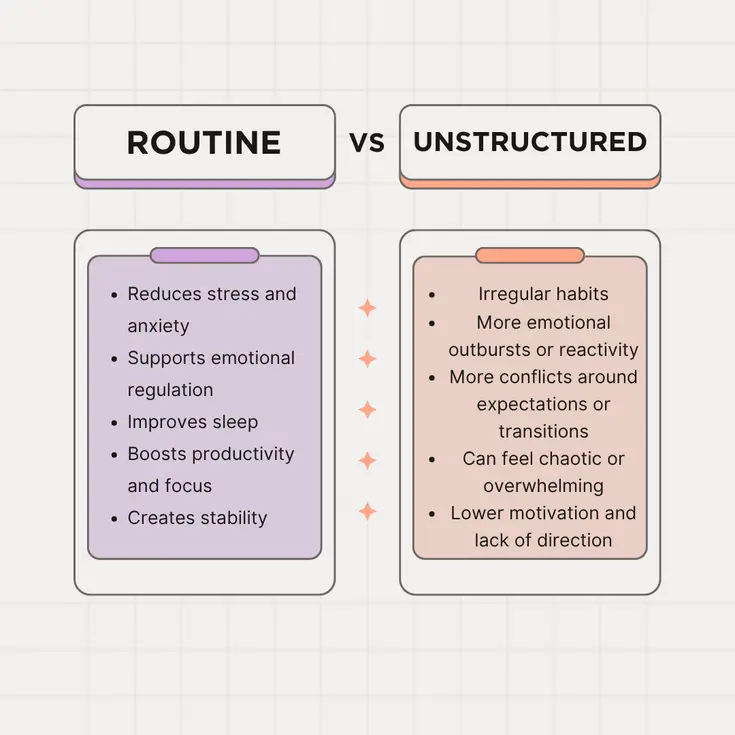
Improving time management for autism parents requires a shift from “reactive” to “proactive” planning. Consider these steps to optimize your family’s routine:
- Leverage Technology: Use visual schedule apps and shared digital calendars to keep all caregivers—including grandparents and siblings—on the same page.
- Delegate and Automate: If possible, automate grocery deliveries and delegate small chores. Focus your energy where it matters most: your child’s development and your own health.
- Incorporate “Box Breathing”: When feeling overwhelmed, inhale for four seconds, hold for four, exhale for four, and hold for four. This resets your nervous system in under a minute.
- Schedule Screenings Early: Regular developmental screenings at Sidra Family Hospital ensure that therapy goals are aligned, preventing “wasted” time on ineffective strategies.

Conclusion: A Family-First Approach
We believe that a caregiver’s mental health is the foundation of a happy home. Prioritizing your peace allows you to better care for your family with clarity and resilience. You do not have to walk this path alone.
If you find yourself feeling overwhelmed or struggling to balance the demands of caregiving, our Lifestyle Medicine department is here to help. Together, we can build a healthier, more balanced home environment for your family.
Frequently Asked Questions
How can I balance therapy sessions, school, and family time effectively?
Prioritize routines using visual aids and try to cluster appointments on specific days. This minimizes “transition time” which can be stressful for both the parent and the child.
What tools can help me manage my schedule as an autism parent?
Visual schedules, digital timers, and shared family apps are excellent. Many parents find success with “First/Then” boards to help children understand the flow of the day.
How can ABA services help save time in my daily routine?
ABA therapy focuses on functional independence. As your child learns to manage their own self-care and transitions, your direct “hands-on” time decreases, allowing you to focus on other respons…ies.
What should I do if I feel overwhelmed with my responsibilities?
Reach out for professional support. At Sidra Family Hospital, we offer parental counseling and developmental guidance to help you navigate these high-stress periods.
How often should I reassess my time management strategies?
We recommend a monthly review. As your child grows and masters new skills, your schedule will naturally need to evolve to meet new goals and challenges.