
Navigating Birth Control Options: Finding What’s Right for You

Choosing the right birth control method is a deeply personal and significant health decision. It’s about empowering yourself to make informed choices that align with your health, lifestyle, and family planning goals. At Sidra Family Hospital, we understand the importance of this journey and are committed to providing compassionate, expert guidance every step of the way.
Beyond preventing pregnancy, modern contraception offers a range of crucial benefits. It can effectively manage hormonal issues such as irregular periods, severe menstrual pain, acne, and conditions like Polycystic Ovary Syndrome (PCOS) and endometriosis. Understanding the diverse options available empowers you to take control of your reproductive health and future.
The Translation: Understanding Your Birth Control Choices
Birth control, or contraception, refers to methods used to prevent pregnancy. These methods work in various ways, from preventing sperm from reaching an egg to stopping ovulation or altering the uterine lining. With so many choices, finding the best fit requires understanding each method’s effectiveness, mechanism, and potential implications for your health.
Barrier Methods: Non-Hormonal and Partner-Involved
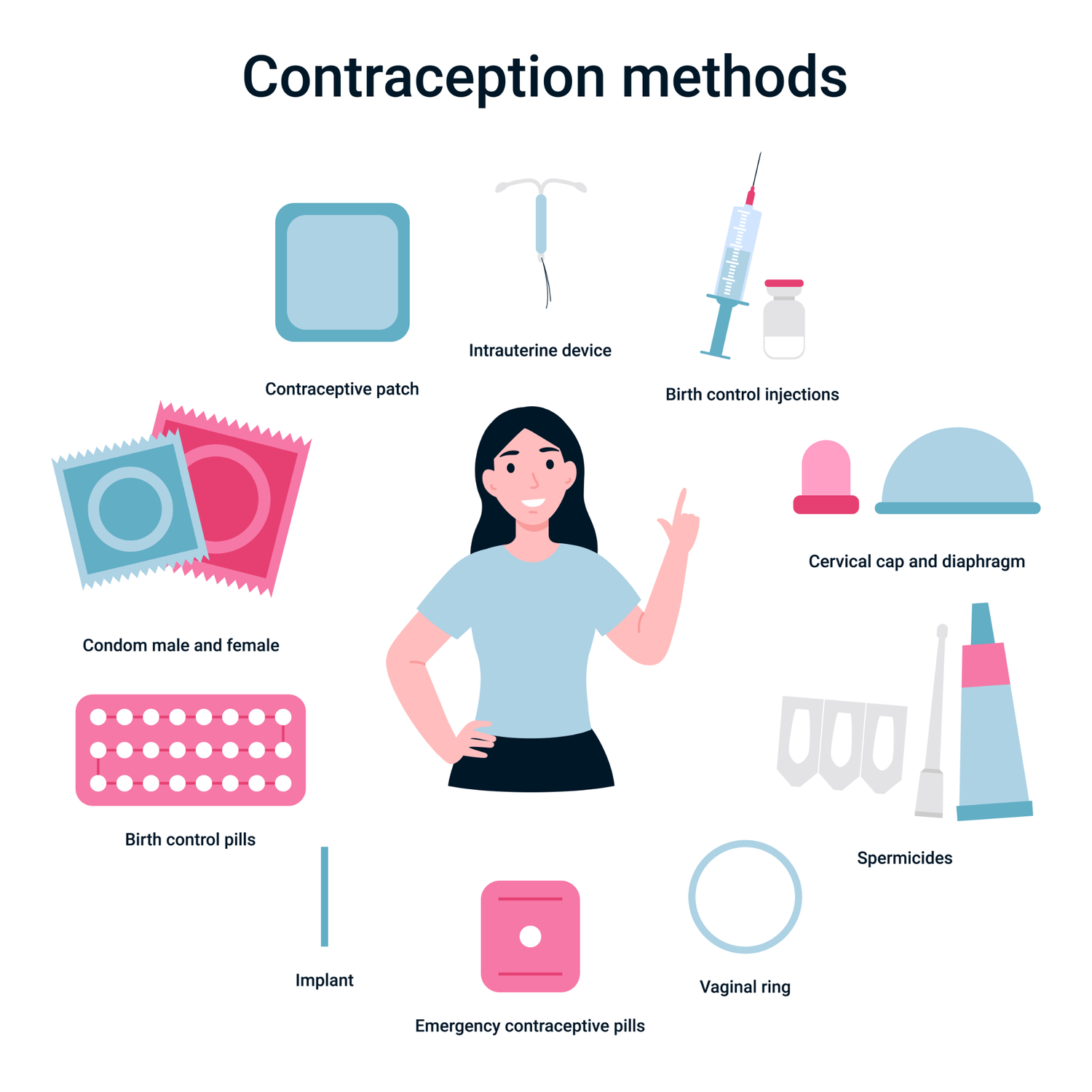
Barrier methods physically block sperm from reaching the egg. They are non-hormonal and often require active participation before or during intercourse. The most common barrier methods include:
- Male Condoms: Worn by the male, condoms are the only contraceptive method that also significantly protects against sexually transmitted infections (STIs). They are widely accessible and highly effective when used correctly.
- Female Condoms: Inserted into the vagina, female condoms offer similar protection against pregnancy and STIs.
- Diaphragms and Cervical Caps: These devices are inserted into the vagina before intercourse to cover the cervix, used with spermicide. They require a prescription and fitting by a healthcare provider.
Hormonal Methods: Reliable and Versatile
Hormonal birth control methods use synthetic hormones (estrogen and progestin, or progestin alone) to prevent ovulation, thicken cervical mucus, or thin the uterine lining. They are highly effective for pregnancy prevention and offer many non-contraceptive benefits.
- Birth Control Pills: Taken daily, pills are a popular and effective option. Combined pills contain both estrogen and progestin, while progestin-only pills are suitable for those who cannot use estrogen.
- The Patch: A thin, beige patch applied to the skin weekly for three weeks, followed by a patch-free week. It releases hormones through the skin.
- The Vaginal Ring (NuvaRing): A flexible ring inserted into the vagina that releases hormones for three weeks, then removed for a week.
- The Contraceptive Injection (Depo-Provera): An injection given every three months, providing highly effective contraception without daily effort.
Long-Acting Reversible Contraceptives (LARCs): Low-Fuss Options
LARCs are among the most effective forms of birth control and are ideal for those seeking long-term, low-maintenance contraception. Once inserted, they can prevent pregnancy for several years.
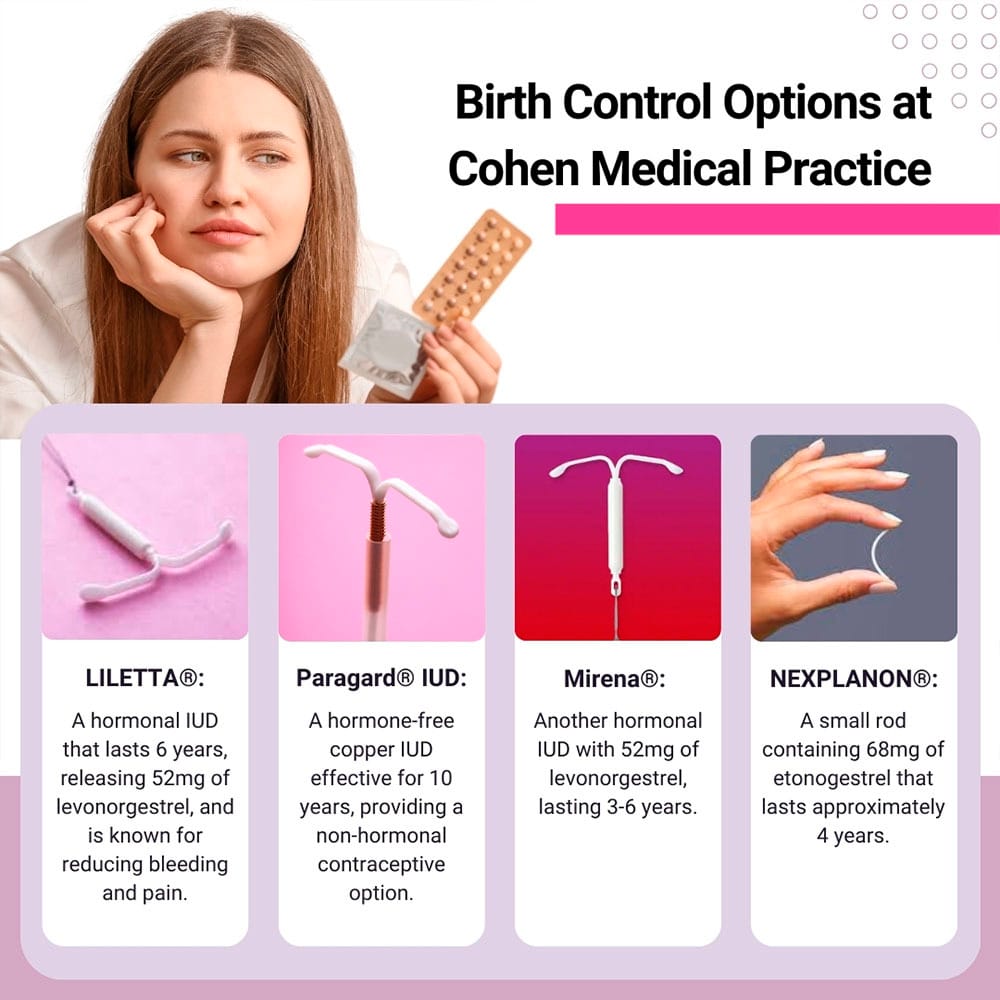
- Hormonal Intrauterine Devices (IUDs): Small, T-shaped devices inserted into the uterus that release progestin. They can last for 3 to 7 years, depending on the type, and can reduce heavy bleeding and cramps.
- Copper Intrauterine Devices (IUDs): Non-hormonal IUDs wrapped in copper, which creates an inflammatory reaction toxic to sperm and eggs. They can last up to 10 years and are a good option for those avoiding hormones.
- Contraceptive Implant (Nexplanon): A tiny, flexible rod inserted under the skin of the upper arm, releasing progestin. It can prevent pregnancy for up to three years.
Permanent Options: When You’re Certain
For individuals or couples who are certain they do not want more children, permanent birth control offers a highly effective solution.
- Tubal Ligation: A surgical procedure for women that blocks or seals the fallopian tubes, preventing eggs from reaching the uterus.
- Vasectomy: A simpler surgical procedure for men that blocks the vas deferens, preventing sperm from being released.
Emergency Contraception: For Unexpected Moments
Emergency contraception (EC), often known as the “morning-after pill,” is used to prevent pregnancy after unprotected sex or contraceptive failure. It is not a regular birth control method but a backup option. It works best when taken as soon as possible after intercourse.
The Socio-Economic Impact: Empowering Families in Pakistan
In Pakistan, informed choices about birth control have profound socio-economic implications, particularly for families. Access to and understanding of effective contraception allows individuals and couples to plan their families consciously, leading to healthier mothers and children. When families can space births, mothers have adequate time to recover, and children receive better care, nutrition, and educational opportunities.
This deliberate family planning directly contributes to women’s empowerment, enabling them to pursue education, careers, and personal development without the overwhelming pressure of unplanned pregnancies. Healthier women mean healthier families and a more robust community. Sidra Family Hospital is dedicated to supporting this empowerment, recognizing that reproductive health is a cornerstone of societal progress and individual well-being in our local context.
The Forward Path: Making an Informed Decision with Sidra Family Hospital
Choosing the right birth control method requires careful consideration of several key factors. Your lifestyle, health history, future family planning aspirations, and personal preferences all play a crucial role in determining the best fit for you.
Factors to Consider for Your Family
- Effectiveness: How well does the method prevent pregnancy? LARCs and permanent methods are generally the most effective.
- Side Effects: Each method has potential side effects. Discuss these thoroughly with your healthcare provider.
- Convenience: Do you prefer a daily routine (pills), weekly (patch), monthly (ring), or long-term (IUD, implant) option?
- Future Fertility: Do you plan to have children in the future? Most methods are reversible, but permanent options are not.
- STI Protection: Remember that only condoms offer significant protection against sexually transmitted infections.
- Medical History: Certain health conditions may make some methods unsuitable for you.
Your Partner in Health at Sidra Family Hospital
Making a confident decision about birth control should always involve a conversation with a trusted healthcare professional. At Sidra Family Hospital, our expert Gynecology department provides confidential, compassionate, and personalized consultations. We take the time to understand your unique needs, discuss all available options in detail, and help you navigate potential benefits and risks.
Our goal is to ensure you feel fully informed and comfortable with your choice, leading to greater peace of mind and control over your reproductive health. Trust Sidra Family Hospital to be your dedicated partner on this important journey, supporting your well-being and empowering your family’s future.