
Obstetric Ultrasound: A Comprehensive Guide for Expectant Families at Sidra Family Hospital

Obstetric Ultrasound: A Comprehensive Guide for Expectant Families at Sidra Family Hospital
The journey of pregnancy is a time of immense anticipation and wonder. At Sidra Family Hospital, we are dedicated to supporting expectant parents through every precious stage, ensuring the health and well-being of both mother and baby. A cornerstone of modern prenatal care is the obstetric ultrasound, a safe and non-invasive diagnostic tool that provides invaluable insights into your baby’s development.
This comprehensive guide will demystify obstetric ultrasound, separating fact from fiction, explaining its crucial role throughout your pregnancy, and detailing what you can expect during your appointments at Sidra Family Hospital’s compassionate Gynecology and Obstetrics department. We empower you with the knowledge and confidence to embrace this incredible journey.
The Translation: Understanding Obstetric Ultrasound for Expectant Parents
An obstetric ultrasound, often simply called a prenatal ultrasound, uses high-frequency sound waves to create live images of your baby inside the womb. These sound waves are completely harmless to both you and your baby, making it an incredibly safe procedure. The images, visible on a screen, allow our medical team to observe your baby’s growth, development, and overall health.
More Than Just a Glimpse: What Ultrasound Reveals
Far beyond just seeing your baby, an obstetric ultrasound provides critical medical information. It helps confirm your pregnancy, accurately date it, and determine if you are carrying more than one baby. As your pregnancy progresses, it allows for detailed assessment of organ development, detection of potential anomalies, monitoring of amniotic fluid levels, and evaluation of the placenta’s health and position. This detailed health check is vital for proactive planning and intervention if needed.
Dispelling Common Myths About Obstetric Ultrasound
Despite its widespread use, some misconceptions about obstetric ultrasound persist. Let’s address them directly:
- Myth 1: Ultrasound Is Unsafe for the Baby. This is false. Decades of research and extensive clinical experience have confirmed that obstetric ultrasound, when performed by trained professionals, is safe for both mother and baby. It does not use radiation, unlike X-rays.
- Myth 2: Ultrasound Is Only for Finding Out the Baby’s Gender. While learning your baby’s gender can be an exciting part of an ultrasound, it is a secondary benefit. The primary purpose is always to assess the baby’s health and development.
- Myth 3: If You Feel Fine, Imaging Isn’t Necessary. Many serious conditions can develop silently during pregnancy. Ultrasound provides an objective view of your baby’s internal development and helps detect issues that might not have outward symptoms. Regular scans are a crucial part of preventive care.

A Closer Look: Transvaginal Scan (TVS) in Early Pregnancy
In the very early stages of pregnancy, typically around 6-10 weeks, a Transvaginal Scan (TVS) may be recommended. This specialized ultrasound involves inserting a small, sterile probe into the vagina. While it might sound daunting, it is generally painless and offers a much clearer, more detailed view of the uterus and embryo than an abdominal scan at this stage.
A TVS at 7 weeks is particularly significant. It allows our specialists to accurately date your pregnancy, confirm the healthy location of the pregnancy (ruling out ectopic pregnancies), and most importantly, detect your baby’s earliest heartbeat – a profoundly reassuring milestone. This powerful moment offers profound reassurance and is a crucial step in ensuring timely care and monitoring.

The Socio-Economic Impact: Nurturing Families in Pakistan with Prenatal Care
The importance of comprehensive prenatal care, including regular obstetric ultrasounds, extends deeply into the socio-economic fabric of families in Pakistan. Early and accurate information about a pregnancy can significantly influence family planning, resource allocation, and overall maternal and child health outcomes.
Empowering Families Through Early Detection
In many Pakistani communities, access to advanced medical imaging can be a challenge. Sidra Family Hospital bridges this gap by providing state-of-the-art ultrasound services. Early detection of potential complications, such as congenital anomalies, growth restrictions, or placental issues, allows families to prepare emotionally and financially. It enables timely medical interventions, which can often prevent more severe health problems and costly long-term care needs for the child.
Reducing Maternal and Infant Mortality
The insights gained from obstetric ultrasounds play a critical role in reducing maternal and infant mortality rates. By identifying high-risk pregnancies, our medical team can implement specialized care plans, counsel parents on potential challenges, and ensure appropriate delivery strategies. This proactive approach safeguards the lives of both mother and baby, contributing to healthier family units and stronger communities.
Psychological and Emotional Well-being
Beyond the physical aspects, the emotional reassurance provided by regular ultrasounds is invaluable. For many expectant parents in Pakistan, where family support networks are strong, a healthy pregnancy means peace of mind for the entire family. Seeing the baby develop, hearing the heartbeat, and receiving positive updates fosters a strong parental connection and reduces anxiety, allowing families to focus on joyous anticipation rather than worry.

The Forward Path: Your Journey with Obstetric Ultrasound at Sidra Family Hospital
At Sidra Family Hospital, we integrate obstetric ultrasound seamlessly into your prenatal care plan. Our dedicated specialists use the latest technology to provide accurate diagnostics and compassionate support. Understanding what to expect at each stage can help you feel more prepared and connected to your pregnancy journey.
What to Expect During an Obstetric Ultrasound Appointment
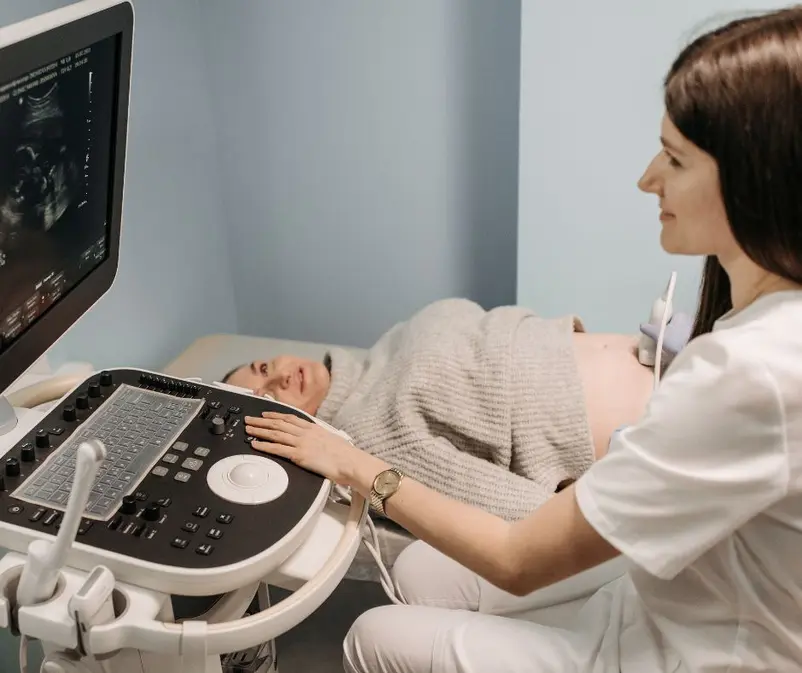
An ultrasound appointment is typically straightforward. You will lie comfortably on an examination table. For an abdominal ultrasound, a gel will be applied to your abdomen, and a transducer (a small, handheld device) will be moved across your skin. The gel helps transmit the sound waves. For a TVS, as mentioned, a sterile probe is gently inserted.
The procedure is generally painless, though you might feel some pressure. Our sonographers and doctors will explain what they are doing and what they are seeing on the screen. The duration varies but typically lasts between 15 to 45 minutes, depending on the stage of pregnancy and the purpose of the scan. You are welcome to ask questions throughout the process.
The Benefits of Obstetric Ultrasound in Each Trimester
Each trimester brings unique developmental milestones and specific reasons for ultrasound examinations:
- First Trimester (Weeks 1-12): Early scans confirm pregnancy, determine gestational age, assess the number of fetuses, detect the fetal heartbeat, and evaluate the uterus and ovaries. This is crucial for early risk assessment and identifying potential complications like ectopic pregnancy or miscarriage.
- Second Trimester (Weeks 13-27): The detailed anatomy scan, usually performed around 18-22 weeks, is a highlight. During this scan, our specialists meticulously examine your baby’s organs, limbs, brain, and spine for any structural anomalies. We also check the placenta’s position and the amount of amniotic fluid. This comprehensive evaluation is critical for identifying conditions that may require specialized care or interventions.
- Third Trimester (Weeks 28-40+): Scans in the final trimester focus on monitoring fetal growth, assessing the baby’s position (head-down or breech), checking placental health, and estimating the baby’s weight to aid in delivery planning. We also conduct biophysical profiles to evaluate the baby’s overall well-being.
When Additional Obstetric Ultrasound Exams May Be Recommended
While routine scans are part of standard care, additional ultrasounds may be recommended for various reasons, including:
- Monitoring fetal growth if concerns arise (e.g., small for gestational age).
- Following up on a suspected anomaly found in a previous scan.
- Assessing placental issues, such as placenta previa or placental abruption.
- Evaluating the baby’s well-being in cases of maternal health conditions like diabetes or high blood pressure.
- If you experience symptoms such as bleeding or abdominal pain.

Choosing Sidra Family Hospital for Your Prenatal Care
Choosing where to receive your prenatal care is a significant decision. At Sidra Family Hospital, our Gynecology and Obstetrics department offers advanced ultrasound facilities, experienced sonographers, and a team of compassionate medical professionals. We prioritize your comfort, understanding, and the health of your growing family. We provide a supportive environment where all your questions are answered, and every step of your pregnancy journey is managed with expert care.
Embrace Your Pregnancy Journey with Confidence
Obstetric ultrasound is an indispensable tool in modern prenatal care, offering peace of mind and vital medical insights. At Sidra Family Hospital, we are honored to be a part of your family’s journey, providing the highest standard of care from conception to delivery. Trust us to guide you with expertise, compassion, and a family-first approach. Schedule your prenatal ultrasound today and take a confident step towards a healthy future for your little one.