Treatment for TMJ Migraines: A Comprehensive Guide to Lasting Relief
Persistent headaches often stem from the jaw, a connection frequently overlooked in family health. At Sidra Family Hospital, we recognize that chronic pain can shrink your world, making daily life and family time a struggle. Finding an effective treatment for TMJ migraines starts with understanding that your jaw and your head are deeply interconnected through complex nerve pathways.
The Hidden Connection Between Your Jaw and Headaches
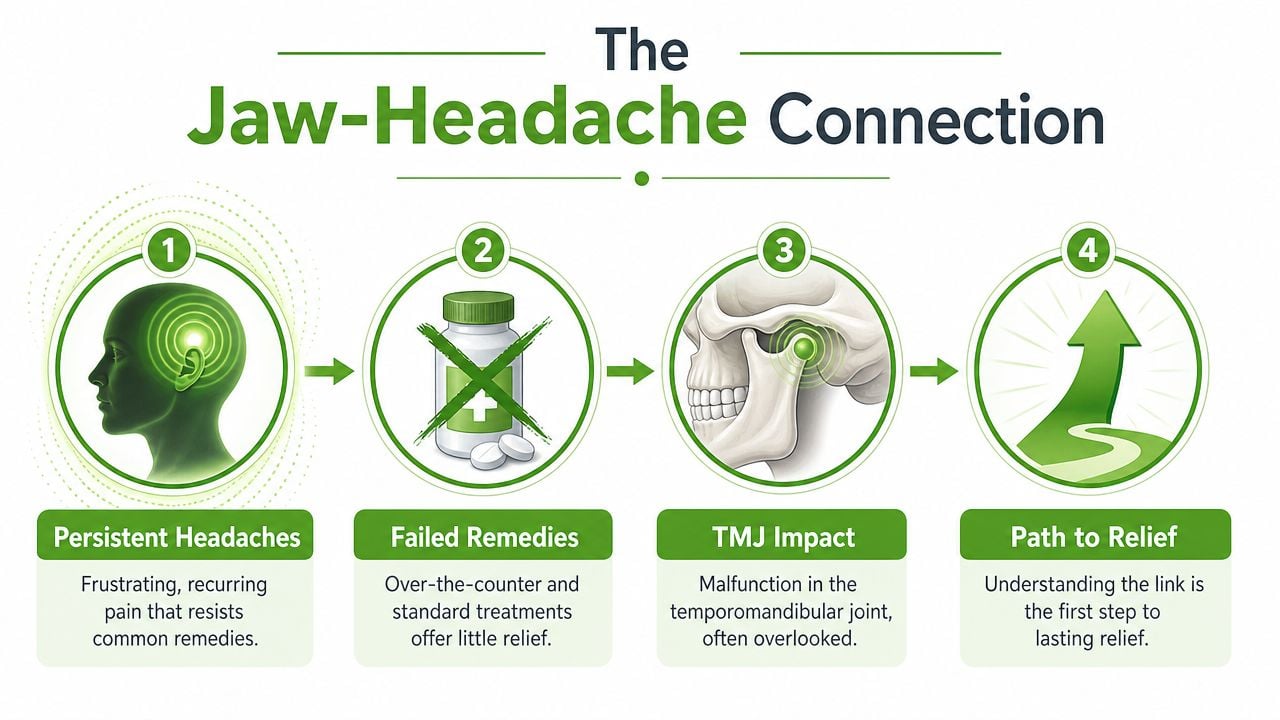
The temporomandibular joint (TMJ) acts as a sliding hinge, connecting your jawbone to your skull. When this joint or the surrounding muscles are under stress—often due to clenching, teeth grinding (bruxism), or misalignment—it can trigger intense migraines. This happens because the trigeminal nerve, which controls jaw function, also plays a primary role in migraine pain pathways.
For many patients in Pakistan, this overlap means they spend years treating the symptoms of a headache while the root cause—the jaw—remains ignored. At our Specialized Care department, we look at the whole picture to ensure your relief is lasting rather than temporary.
The Translation: Breaking Down TMJ and Migraines
In simple terms, TMJ refers to the joint itself, while TMD (Temporomandibular Disorder) refers to the problems affecting it. When we talk about treatment for TMJ migraines, we are referring to a specialized approach that calms the overactive muscles of the face and jaw.
Think of your jaw muscles as a team that never gets a break. When you clench your teeth during sleep or stress, these muscles become exhausted and inflamed. This inflammation sends “danger” signals to the brain, which then interprets them as a full-blown migraine. Our goal is to “silence” these signals by addressing the mechanical stress at the source.
Getting the Right Diagnosis for Lasting Relief
A careful differential diagnosis is the cornerstone of our care. Not every headache is a migraine, and not every jaw click is TMD. Our specialists look for specific indicators, such as morning jaw soreness, limited mouth opening, or clicking sounds accompanied by pain. During a specialist visit at Sidra Family Hospital, we may use advanced imaging to see how your bite interacts with your joint mechanics.
Building a Foundation with Conservative Treatments
We always prioritize conservative, non-invasive methods first. Custom-designed splints or “night guards” are often the first line of defense. Unlike over-the-counter options, these are precisely calibrated to your bite, allowing your jaw muscles to relax in a neutral position. Physical therapy also plays a vital role, treating the mechanics of the joint rather than just the pain.
The Socio-Economic Impact: Pain in the Pakistani Household
In our local context, chronic pain is more than a personal burden; it is a family crisis. When a parent suffers from a debilitating migraine, it affects the “sukoon” (peace) of the entire home. Breadwinners lose productivity, and mothers—often the heart of the household—may find it difficult to manage the needs of their children and elders.
Furthermore, the economic cost of repeated, ineffective treatments is high. Many families spend significant resources on “quick-fix” painkillers that eventually lead to rebound headaches. By providing a definitive treatment for TMJ migraines, Sidra Family Hospital helps families save both time and emotional energy, restoring the harmony of the home.
Advanced Therapies for Complex Cases
When conservative measures aren’t enough, we offer targeted interventions. This includes regenerative injections and cold laser therapy to modulate symptoms. One of the most effective tools for chronic cases is medical-grade Botox. When injected into specific trigger points in the jaw and temple, it relaxes the muscles and blocks the pain signals before they reach the brain.

The Forward Path: Steps Toward Recovery
The journey to a pain-free life begins with awareness and small daily changes. We recommend the following steps for our patients:
- Track Your Triggers: Keep a diary of when your headaches occur. Is it after a stressful day or a night of poor sleep?
- Adopt a Soft Diet: During flare-ups, avoid hard or chewy foods to give your jaw joints a rest.
- Practice Gentle Movement: Instead of “guarding” or keeping your jaw stiff, try gentle stretching exercises as recommended by our therapists.
- Consult a Specialist: If you find yourself taking painkillers more than twice a week, it is time to seek professional treatment for TMJ migraines.
At Sidra Family Hospital, our “Family-First” philosophy ensures that whether you are visiting our Pediatrics, Gynae, or Specialized Care units, your comfort is our priority. Don’t wait for the pain to become unbearable. Visit us today to start your personalized roadmap to recovery.